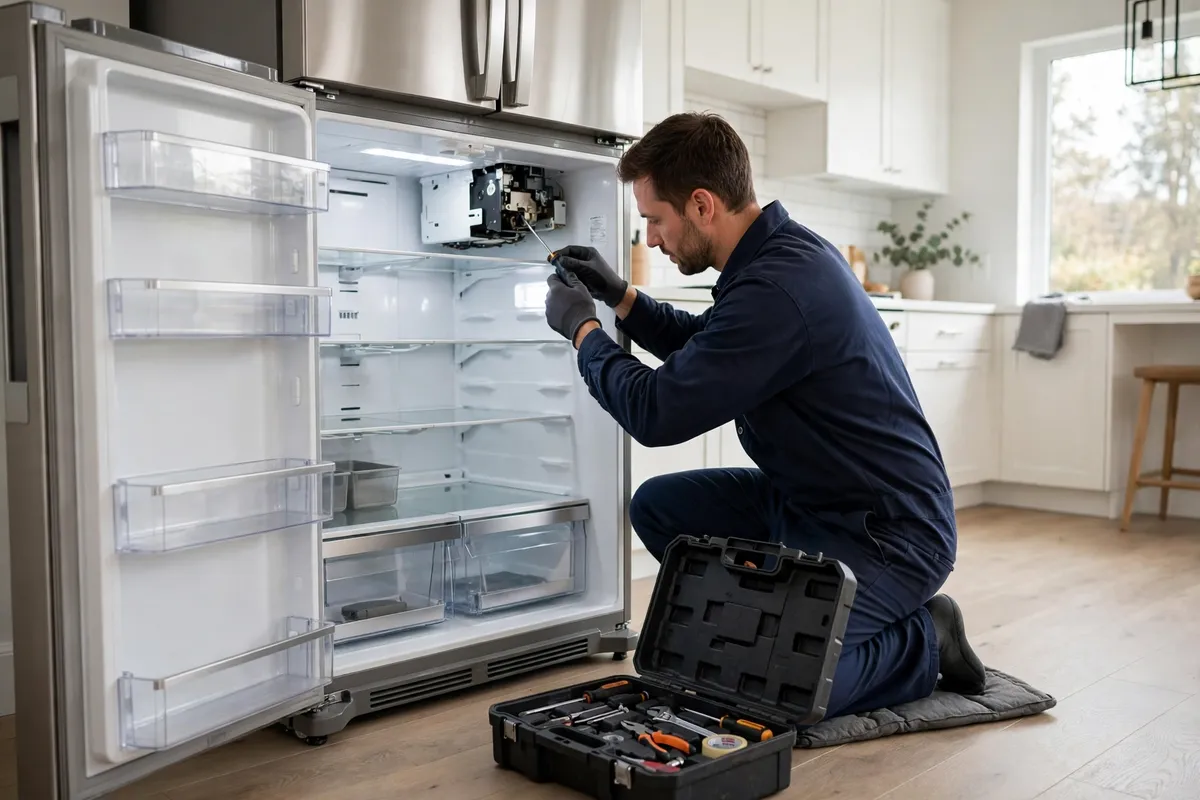
Start With the Safe Checks
Before you assume a major failure, check three simple things. First, make sure the temperature control has not been knocked to a warmer setting, and that the fridge is not set to a demo or vacation mode. Second, check that food, bags, or containers are not blocking the vents inside the fridge or freezer, because blocked vents stop cold air from circulating. Third, look at the door seal: close the door on a piece of paper and pull gently. If the paper slides out easily all around the door, the seal may be letting warm air in.
Also check the space around the fridge. A refrigerator pushed hard against a wall, or surrounded by clutter, cannot shed heat properly. Leave the clearance the maker recommends, and keep the front grille and rear coils free of dust where you can reach them safely.
Airflow, Fans, and Frost
If the freezer is cold but the fridge is warm, airflow is a likely suspect. Cold air usually travels from the freezer to the fridge through vents and a fan. If the evaporator fan has failed, or frost has blocked the vents, the freezer may stay cold while the fridge warms up. Thick frost in the freezer, or a fan that never runs, points in this direction.
Frost can also come from a defrost problem. A defrost heater, thermostat, or control that has failed lets frost build until airflow is blocked. Do not chip ice away with a knife or screwdriver: you can puncture a line or damage the cabinet. Switch the fridge off if food safety allows, keep the doors closed, and call for a diagnosis.
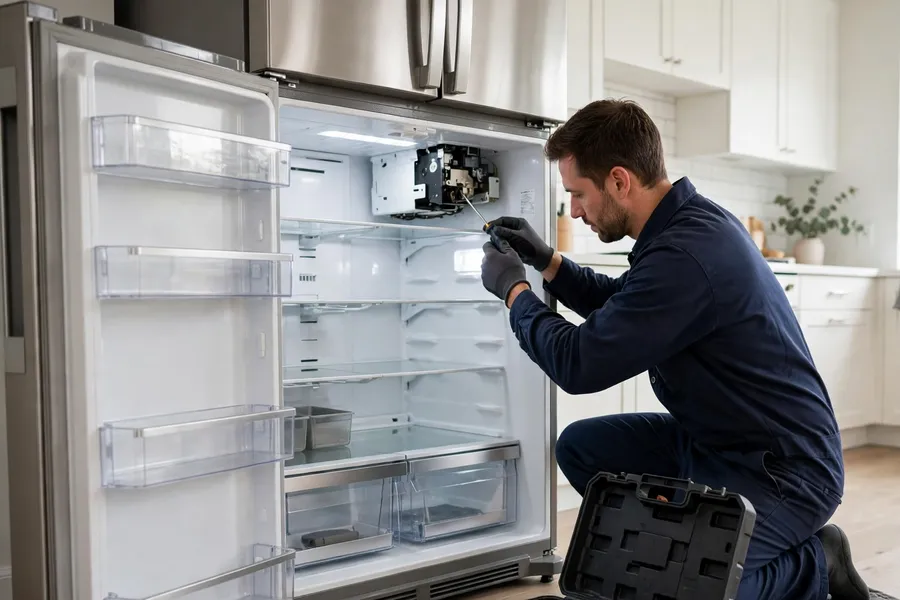
Cooling Parts and Controls
If airflow and seals look right, the cooling system or its controls may have failed. A start relay, thermostat, temperature sensor, or control board can stop the compressor from running properly, or stop it from running long enough. A compressor that clicks on and off, or never starts at all, needs testing with the right tools.
Sealed-system work, including refrigerant, is not a homeowner job. Do not open panels around the compressor or attempt to add refrigerant. A technician can test the electrical parts first, because many warm-fridge calls turn out to be a failed relay, fan, or sensor rather than the compressor itself.
Food Safety While You Wait
Keep the fridge and freezer doors closed as much as possible. If the fridge is above 40 degrees Fahrenheit, move perishable food to a cooler with ice, or to a working refrigerator. Do not keep opening the door to check whether it has cooled down: every opening lets warm air in. If food has been warm for a long time and you are unsure whether it is safe, err on the side of throwing it away.
When you call, tell us the brand and model number, whether the freezer is still cold, whether you hear the fan running, and how long the fridge has been warm. That helps us bring the right approach to the visit. See our refrigerator repair page for what a visit includes.